
Climate, ecosystems and resilience
Global stocktake · Implications for land, water and livelihoods
UN stocktake reveals the uneven reach of ecosystem restoration
Public launch: 29 October 2026, Yerevan. The stocktake combines sources with different observation periods.
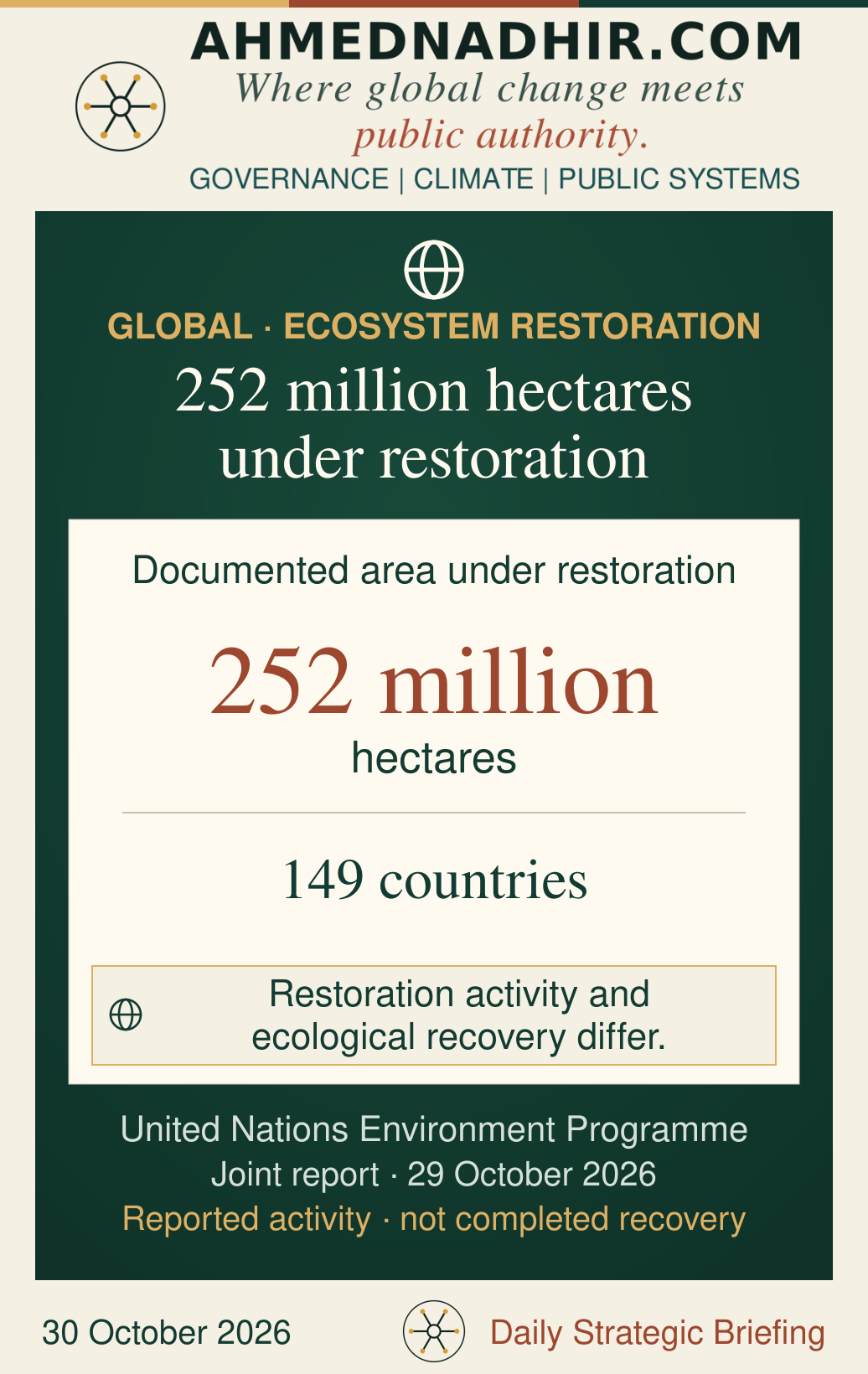
Nature’s Comeback, published jointly by the Food and Agriculture Organization of the United Nations, the United Nations Environment Programme and the Secretariat of the Convention on Biological Diversity, documents 252 million hectares under restoration across 149 countries. The report was publicly launched on 29 October. It describes restoration in progress, rather than 252 million hectares of completed ecological recovery.
Freshwater, marine and coastal restoration is less extensively documented than terrestrial work. Limited monitoring can undercount aquatic activity. The publishers also identify Ethiopia among countries with substantial documented restoration. Regional totals reflect differences in land area and reporting capacity as well as activity, so they do not establish a ranking of success.
Climate finance and African economies
International funding · New single-country projects include Algeria and Cameroon
Green Climate Fund approves US$1.9 billion at its latest Board meeting
Board meeting: 26–29 October 2026, Songdo, Republic of Korea. Outcome announcement: 29 October 2026.
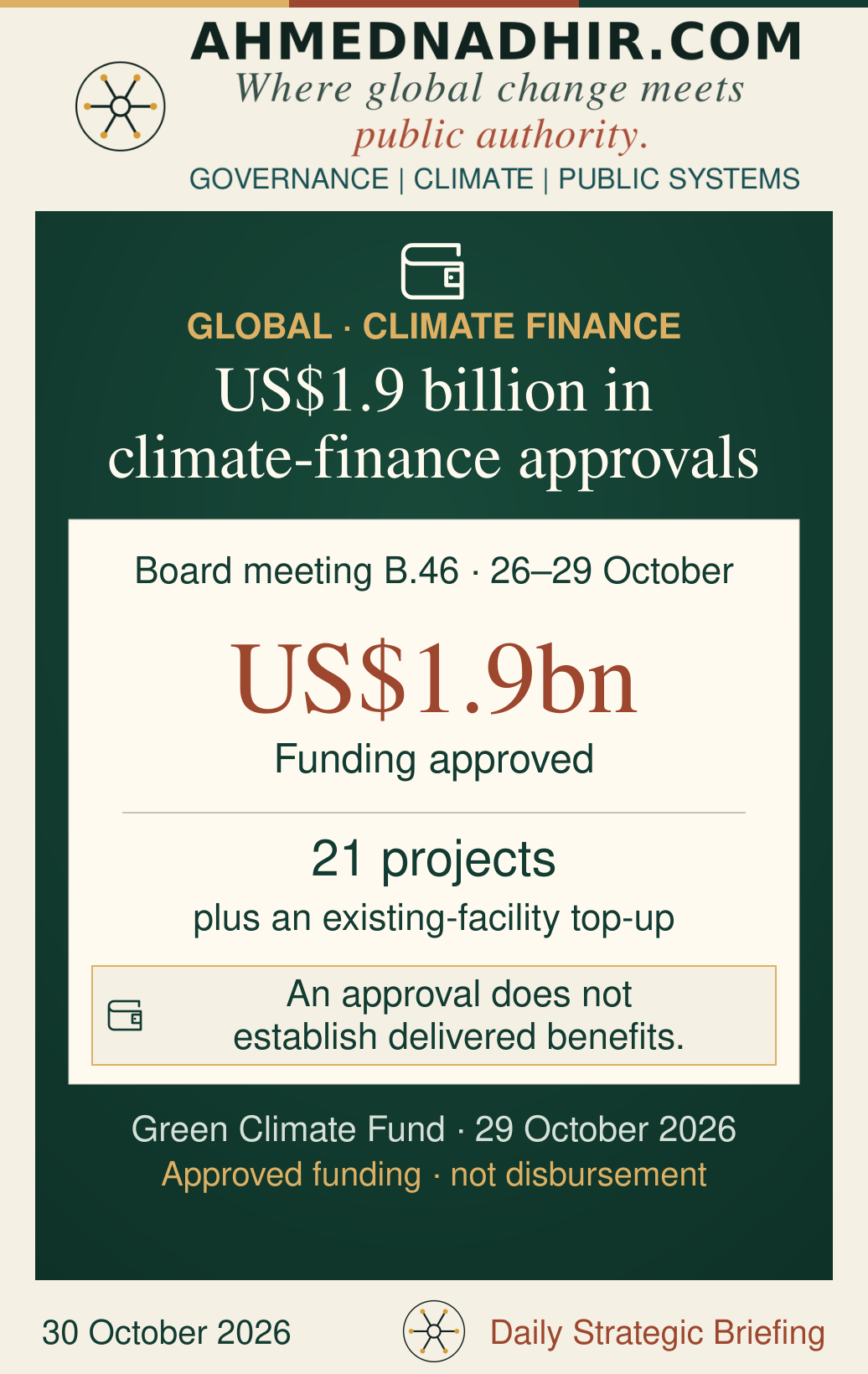
The Green Climate Fund (GCF) announced US$1.9 billion in approvals from its forty-sixth Board meeting, covering 21 projects and additional financing for an existing facility. Its 2026 approvals now total US$3.2 billion. These figures concern the Fund’s commitments, rather than money already disbursed to projects.
Direct Access Entities will manage 34% of the funding approved at the meeting. The Fund identifies first single-country projects for Algeria and Cameroon, alongside other countries. Direct access describes an institutional route for managing finance; it does not mean that the same share reaches local communities directly.
Artificial intelligence and health systems
Europe and Central Asia · International policy comparison
53 countries adopt a regional plan for artificial intelligence in health
Adoption reported: 29 October 2026, at the WHO Regional Committee for Europe. Roadmap period: 2026–2033.
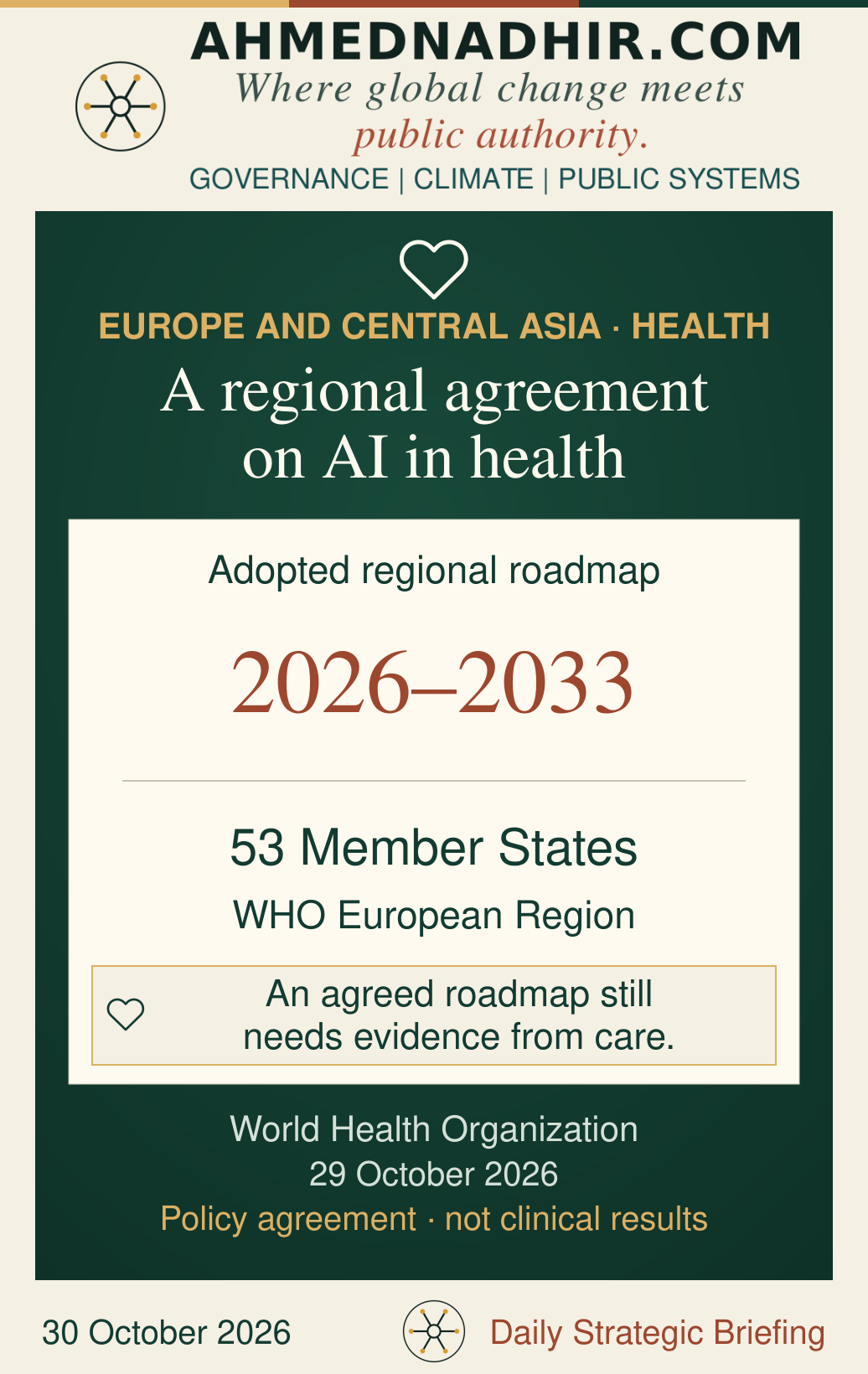
The World Health Organization (WHO) reports unanimous adoption of the European Region’s first roadmap for artificial intelligence (AI) in health by its 53 Member States. The agreement covers 2026–2033 and brings governance, safeguards, digital foundations and implementation support into a common regional approach.
Its priorities include workforce skills, data quality, secure access and evaluation in real-world settings. Adoption establishes a shared policy direction across Europe and Central Asia. It does not demonstrate that a particular tool improves care, certify a product or create a legal requirement for health systems outside the Region.