
African economies and public finance
Egypt · National economic and institutional reforms
Egypt signs US$1 billion agreement for the second phase of reform financing
Agreement signed and government account dated: 1 November 2026. World Bank approval announced: 8 May 2026.
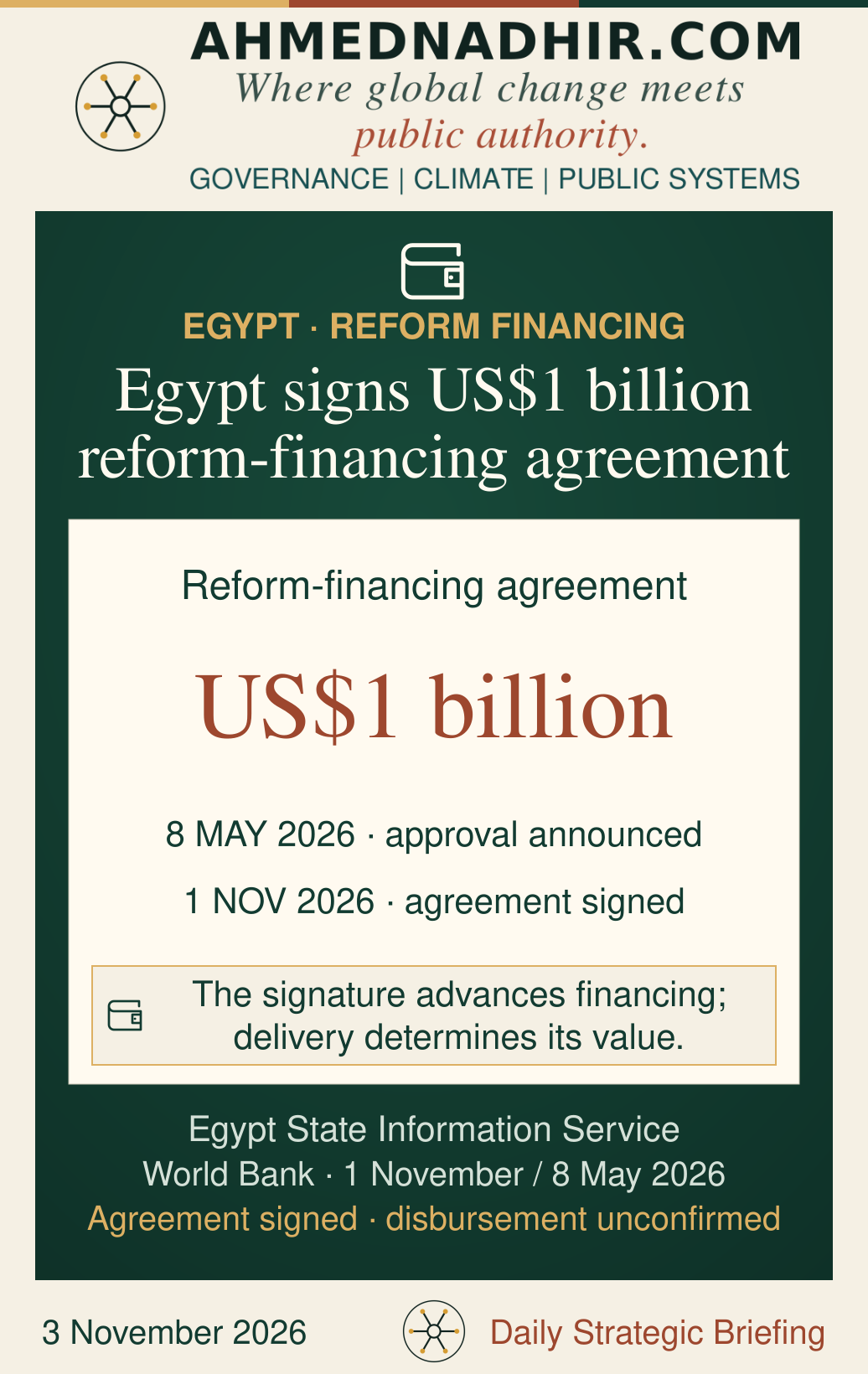
Egypt signed a US$1 billion financing agreement with the World Bank on 1 November, according to the State Information Service. Foreign Minister Badr Abdelatty and the Bank’s Alwaleed Alatabani signed for the two parties. The agreement concerns the second operation in a planned series of three development policy financing operations. The recent development is the signing; the Bank announced approval on 8 May.
The Bank’s May account sets out the programme’s substance: stronger governance of state-owned enterprises, fair competition, domestic revenue and debt-market reforms, and support for a greener economy. It also links social protection beneficiaries with health insurance. The environmental measures include emissions monitoring and the financial sustainability of electricity and water services. These are supported policy directions, rather than results established by the November ceremony. Neither the signing report nor the May announcement confirms a fresh disbursement on 1 November.
Governance and public accountability
Global evidence · Judicial follow-up of journalist killings
United Nations cultural agency reports 86% of journalist killings remain unresolved
2026 findings publicised: 2 November 2026. The separate recent killing count covers 2024–2025.
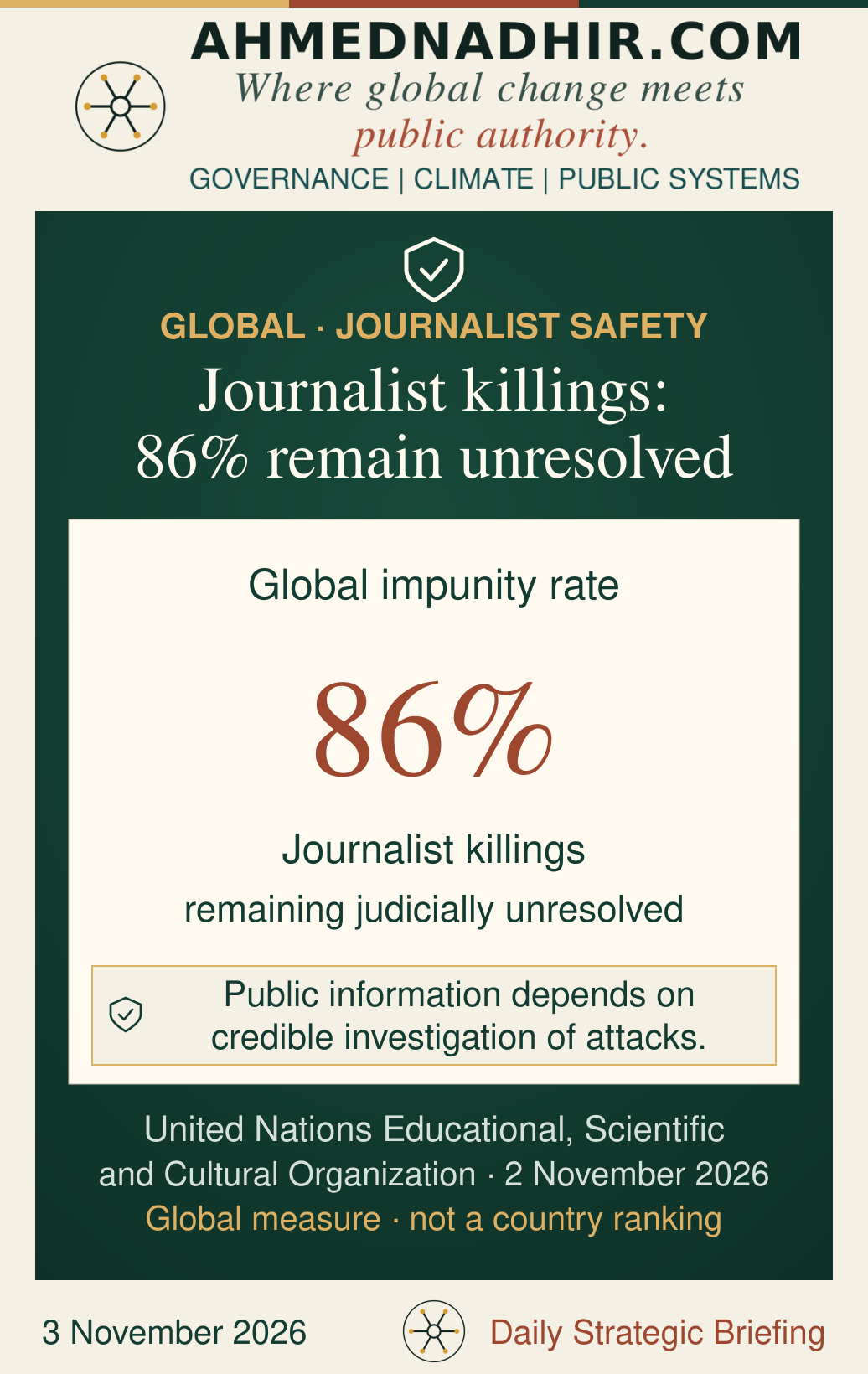
The United Nations Educational, Scientific and Cultural Organization (UNESCO) publicised new findings on 2 November showing that 86% of journalist killings remain judicially unresolved. Its 2026 material reports 189 journalists killed in 2024 and 2025. The impunity rate and that two-year death toll describe different measures: the percentage is not the share of those 189 cases alone.
UNESCO’s current campaign page places the global impunity rate one percentage point above the previous figure. AFP’s dated account corroborates the 86% finding and explains that the rate includes investigations that have not concluded or remain under way. It is not a finding that every unresolved case has been abandoned, nor a country-specific conviction rate.
Health systems and emergency preparedness
Ethiopia and the WHO African Region · Emergency clinical capacity
Addis Ababa meeting puts national emergency medical teams in focus
World Health Organization account published: 2 November 2026. Meeting scheduled: 3–5 November 2026, Addis Ababa.
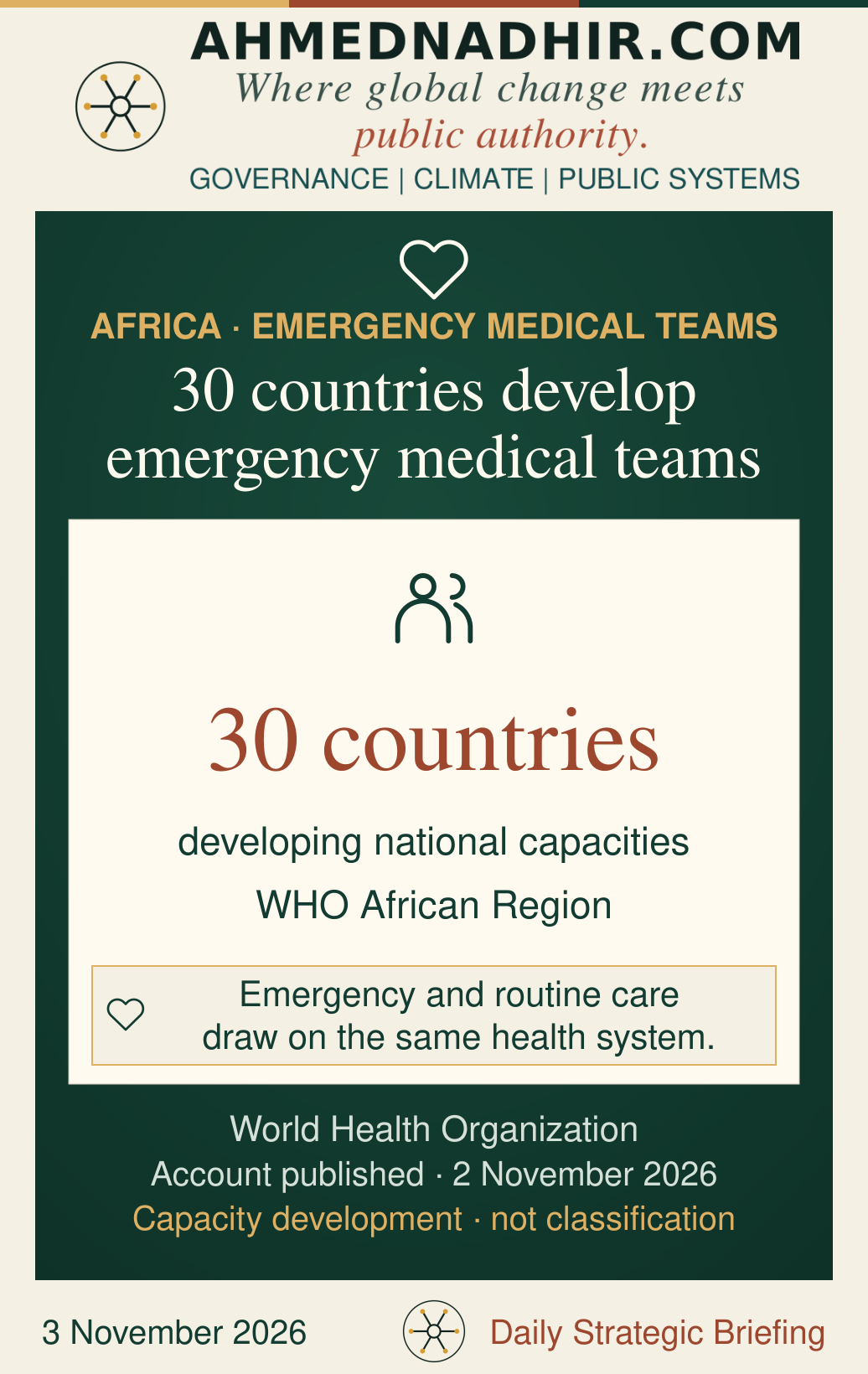
Ethiopia and the World Health Organization (WHO) are convening the seventh Emergency Medical Teams Global Meeting in Addis Ababa on 3–5 November. WHO’s 2 November announcement describes it as the first such global meeting in its African Region. It reports that 30 countries across the region are developing national emergency medical team capacities.
The announcement identifies financing, standards and operational readiness as central subjects. It also reports that Ethiopia’s national team achieved WHO international classification in September following assessment of its clinical services, logistics and readiness. Developing capacity, achieving classification and deploying a team are distinct stages. The announcement establishes neither 30 classified teams nor an improvement in emergency patient outcomes.