
Cameroon: the pressure comes at payment time
Economic update issued in Yaoundé on 19 November 2026
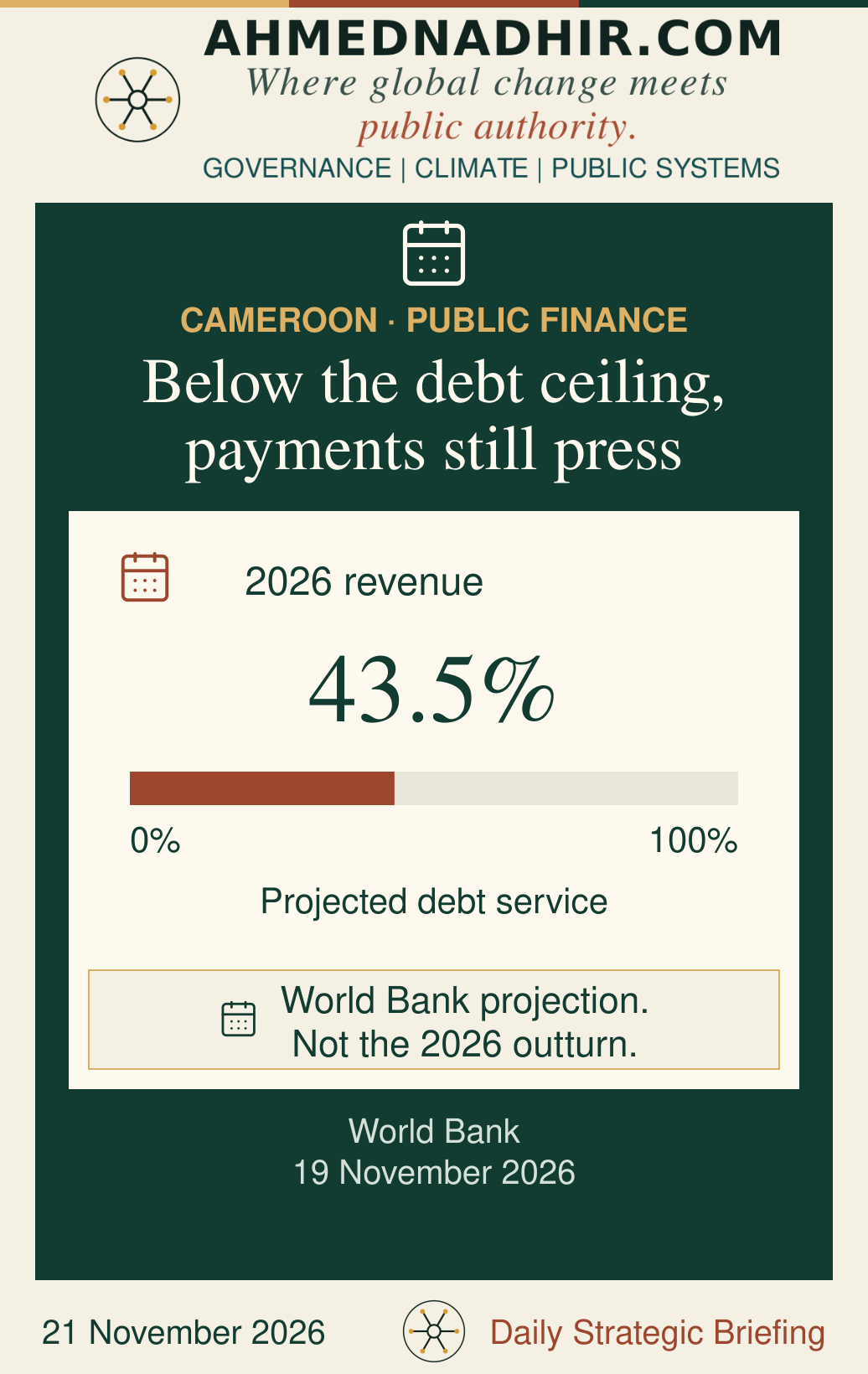
A government can comply with a debt ceiling and still have little money left when its bills fall due. The World Bank’s Cameroon Economic Update projects that debt service will take 43.5% of government revenue in 2026. The update points to short maturities, rising interest costs, domestic arrears and the pressure of refinancing. The figure is a projection for the year, rather than a final outturn.
The difference is between the stock of debt and the demands it makes on the budget this year. Even a project with a sound economic case can create a cash squeeze if its financing falls due before the expected tax receipts or operating savings arrive. When a treasury postpones a supplier payment to meet another obligation, part of the financing strain passes to the firm delivering the work.
For Kenya and other African treasuries, the useful comparison is between borrowing options for the same investment. A lower interest rate can be attractive; the repayment calendar, existing obligations and the investment’s likely completion date determine whether that option crowds out other spending. Cameroon’s figure does not travel across borders. The distinction between fiscal rules and the timing of payments does.
Philippine firms need energy loans that match the savings
OECD report published 20 November 2026
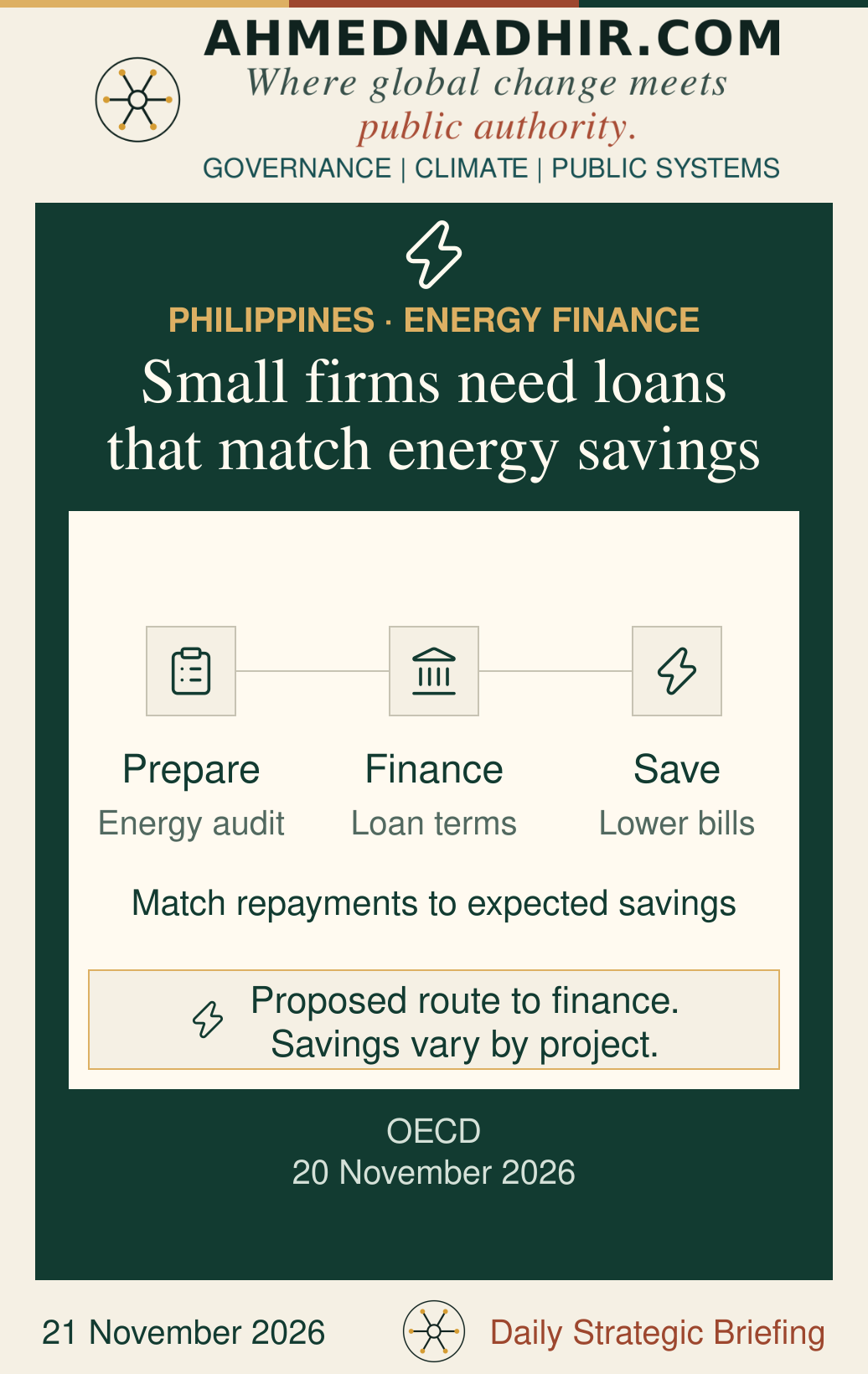
A business looking to replace inefficient equipment must pay for it before it can save on electricity. The Organisation for Economic Co-operation and Development (OECD) finds that smaller Philippine firms and their lenders see different sides of the same problem. Firms report a shortage of help preparing projects; lenders report too few projects ready for finance. Around half of each survey group reported collateral constraints. The survey describes the respondents’ experience, rather than establishing a national prevalence.
A credit guarantee can share part of a lender’s loss. It cannot establish whether a machine will save enough electricity, or whether the business will have the cash when repayments begin. The report proposes more consistent project preparation and loan terms that reflect investment horizons. The institutional implication for public development lenders is to assess preparation and loan design together. A borrower with a credible estimate of savings can still be offered a repayment schedule that defeats the investment.
China: the apparent AI emissions benefit depends on the test
Accepted research published online in Scientific Reports, 20 November 2026 · city data for 2013–2021
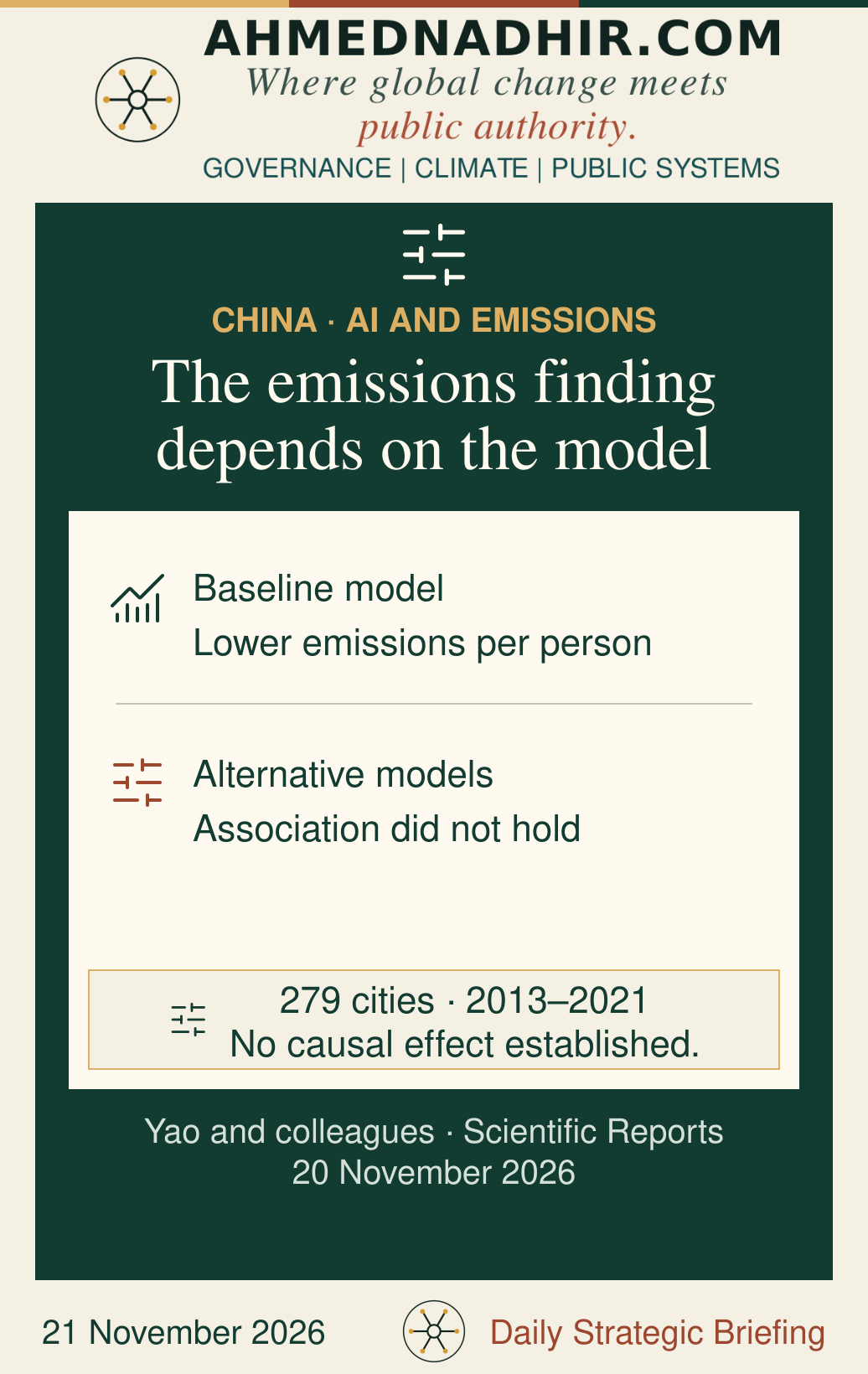
Hong Yao and colleagues examined 279 Chinese cities. Their measure of artificial intelligence (AI) development combined policy support, firms and patents, and public attention. Cities with higher values on that measure tended to have lower carbon emissions per person in the main model. The association did not hold when the authors allowed each city its own linear trend or used changes between observations in a first-difference model.
That is a warning for cities attaching energy savings to digital contracts. The study measures several signs of AI development together; it does not measure the electricity saved by buying a particular system. A purchaser assessing an emissions claim needs an operational baseline, a comparison and an accounting boundary that includes the computing involved. A citywide association cannot stand in for those measurements.
Put the promise on the same calendar as the obligation
Cameroon’s budget must carry repayments even when a project is delayed. A Philippine firm needs electricity savings to arrive in time to service its loan. A city buying an AI system needs to know when, and against what baseline, the promised savings can be measured. These are different decisions. They share a practical test: whether the evidence for a future benefit is strong enough, and arrives soon enough, to justify a commitment today.