
Putting a service online is the first test
Global · United Nations survey launched 19 November 2026
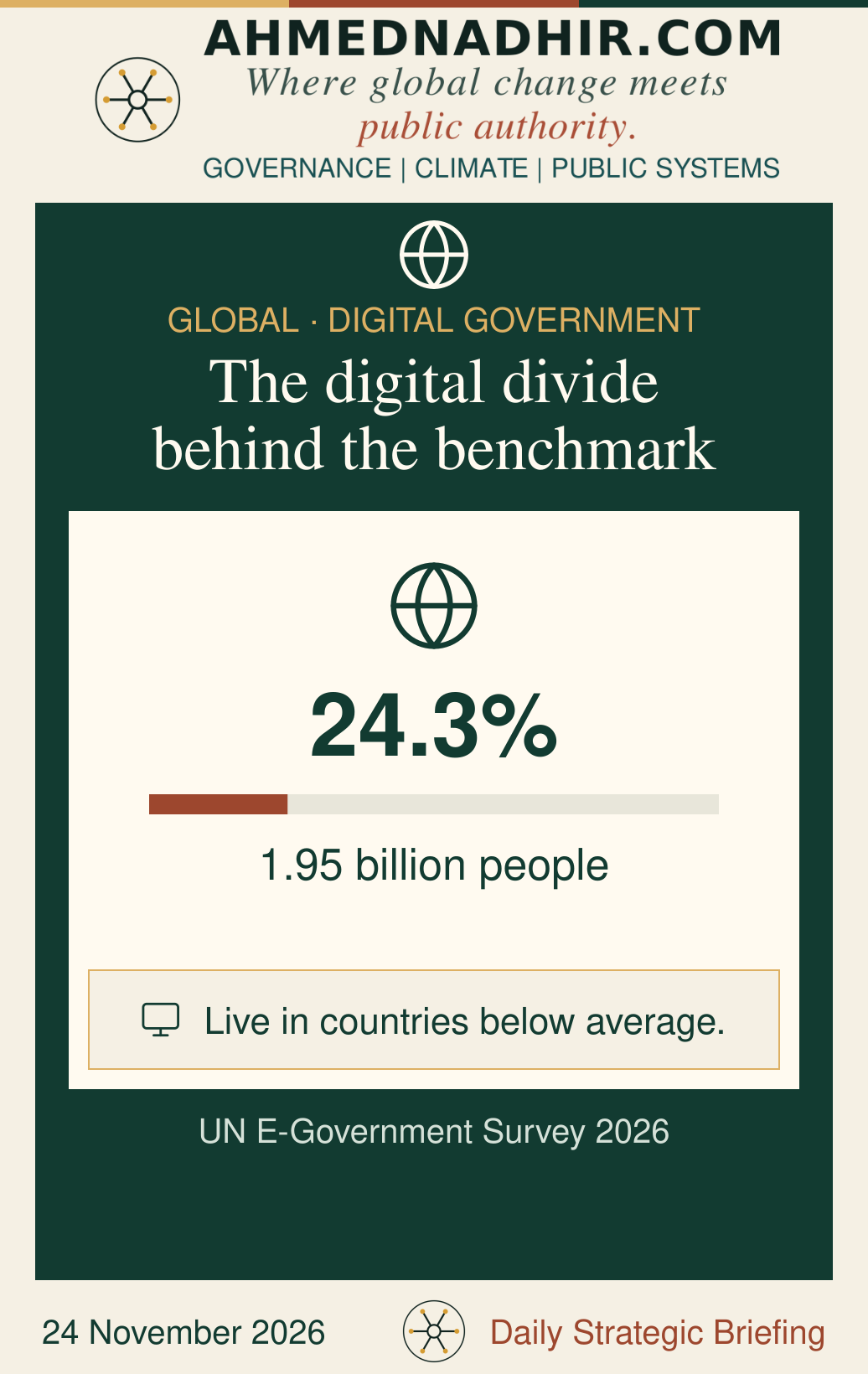
The United Nations Department of Economic and Social Affairs assessed 193 Member States and, for the first time, the State of Palestine. Of the 194 assessed, 151 scored high or very high on its E-Government Development Index. At the same time, about 1.95 billion people, 24.3% of the world’s population, lived in countries below the global average on that index. The first figure counts countries; the second counts people living in those countries. Neither measures an individual’s ability to complete a transaction.
As Kenyan agencies consider artificial intelligence (AI) for public services, the useful starting point is a transaction residents already struggle to complete. A test of an automated application assistant, for instance, could measure completion and correction across languages and connection speeds, and track whether an applicant can reach an officer when the system misunderstands the case. A national benchmark provides context. The service owner still needs evidence about the people using that particular service.
Rwanda: a connection and a dependable supply
Rwanda · October implementation report listed on 22 November 2026
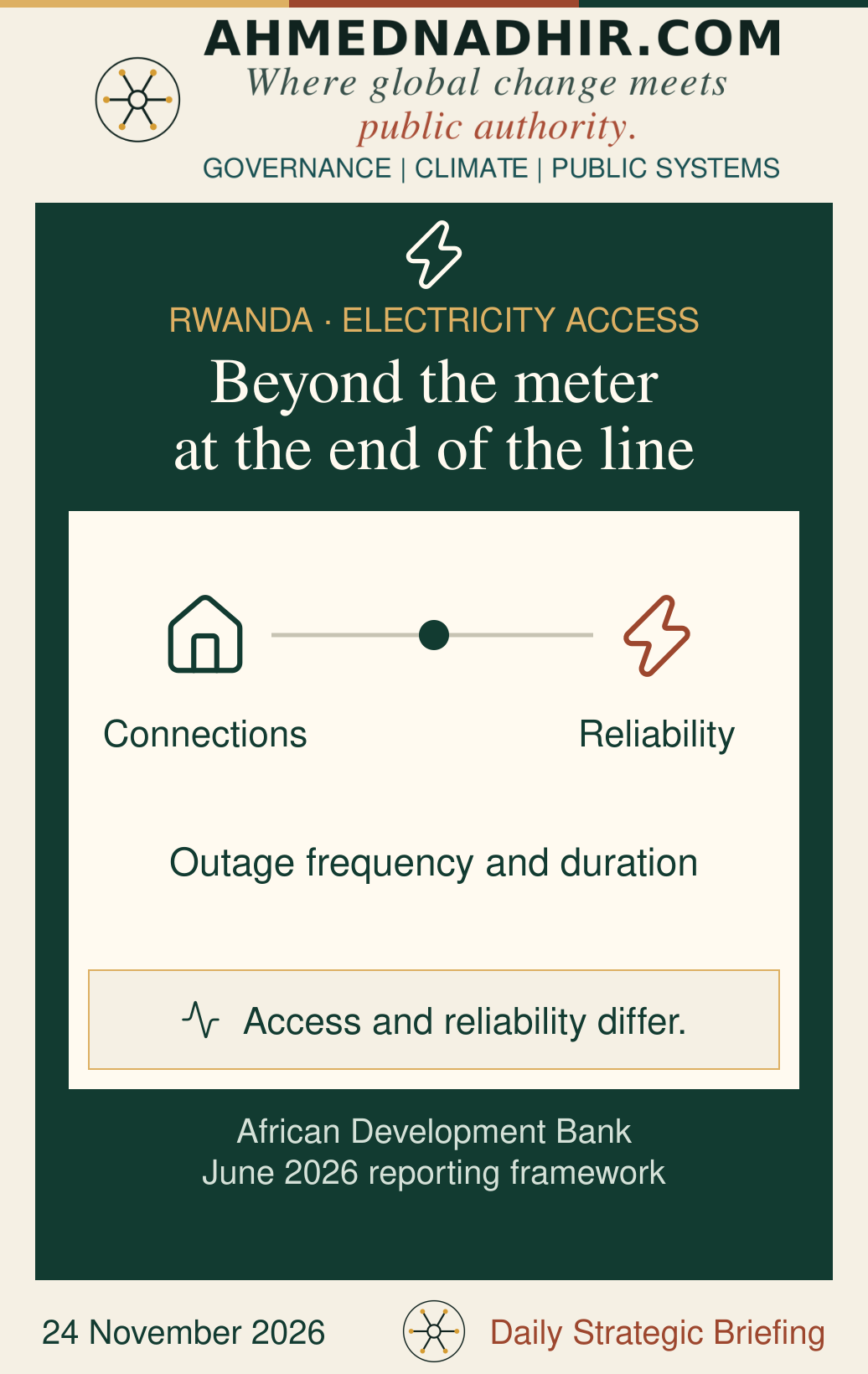
The African Development Bank listed an October progress report for Rwanda’s transmission reinforcement and last-mile connectivity project on 22 November. The programme aims to strengthen the network nationally and extend access for households and productive users in southern Rwanda. Its earlier report, dated 3 June, tracked access alongside outage duration, outage frequency and power losses. Those are separate measures of delivery; the presence of an October report does not establish that any target has been met.
For East African utilities and regulators, the distinction is practical. A programme may connect new households while the feeder serving them remains prone to interruption. Reporting connection totals alongside the duration and frequency of outages on the newly served network would let a regulator distinguish expansion from reliability. A national average can obscure the experience of the communities the investment was designed to reach.
Switzerland: the bill can shape where care happens
Switzerland · Health system review published 23 November 2026
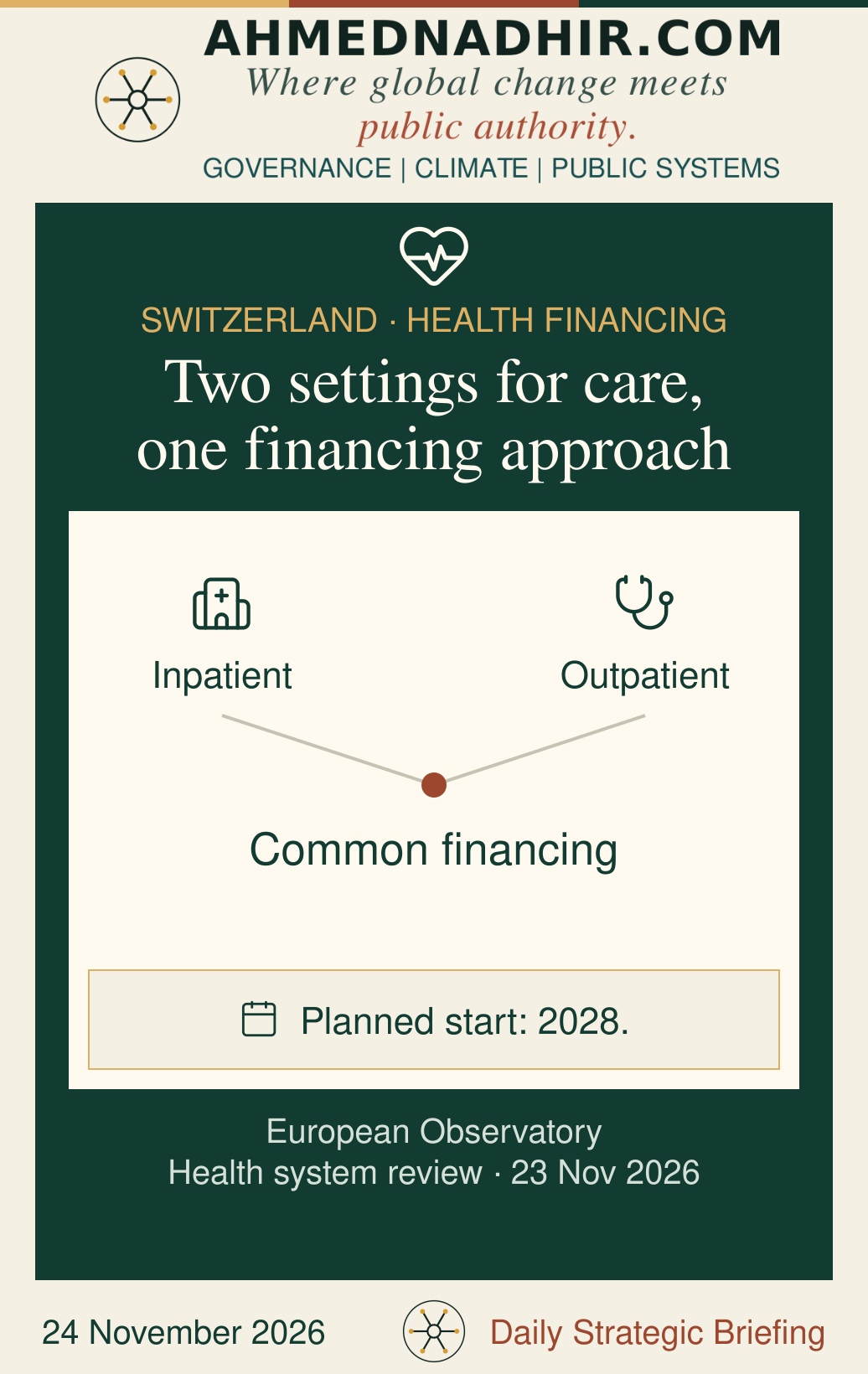
The European Observatory on Health Systems and Policies describes a Swiss reform intended to reduce financing incentives that favour inpatient treatment. Uniform Financing of Outpatient and Inpatient Services is due to begin in 2028. The review sets out the reform’s purpose and timetable. It cannot establish what will happen to costs, access or outcomes after implementation.
For health purchasers in Africa and elsewhere, the comparison is about incentives rather than transplanting a financing model. Where a procedure can safely be offered without admission, the price of the hospital episode is only part of the calculation. Follow-up, transport and care at home also matter. A purchasing review that counts the whole episode can establish whether a change in setting saves resources or shifts costs to patients and families.
Measure the service from the user’s side
A portal records the application it receives. A utility records the meter it installs. A hospital records the encounter it bills. These records matter, but each has a blind spot. The agency knows more about delivery when it can also see whether the applicant finished, whether electricity kept flowing and whether the patient got the follow-up care they needed.