
FOOD SAFETY
East Africa · Meeting in Kigali, Rwanda
East Africa coordinates the work behind safer food
Meeting: 6–9 October 2026 · Outcome account published: 9 October
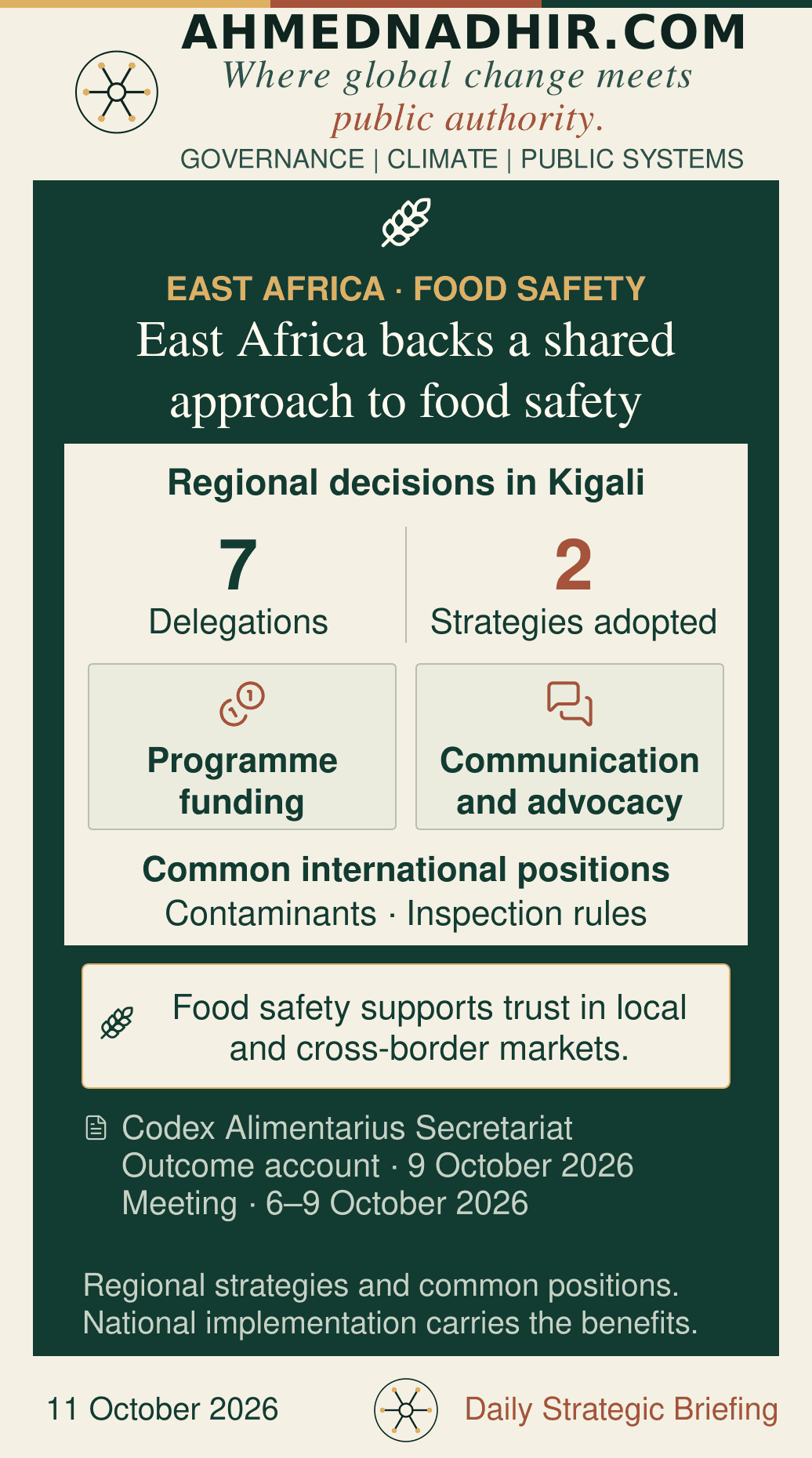
Delegates from seven East African Community (EAC) partner states met in Kigali, Rwanda, from 6 to 9 October and adopted resource-mobilisation and communication and advocacy strategies for the region’s food-safety programme. The Codex Alimentarius Secretariat reported the outcomes on 9 October. The two strategies support the EAC Codex Forum’s 2026–2031 plan.
The delegates also agreed common positions for international discussions on food contaminants and import and export inspection and certification. Codex is the food-standards system run jointly by the Food and Agriculture Organization of the United Nations and the World Health Organization. Regional preparation gives East African institutions a shared basis for bringing their experience into those discussions.
For a producer, a food rule becomes commercially useful through the steps needed to meet it: a recognised test, a reliable inspection and the right documents. A business shipping food across a border needs those steps to work together. For the consumer, the same system supports confidence in what is sold. The meeting strengthens regional coordination; its benefits will develop through the services and national decisions that follow.
HEALTH SYSTEMS
Ghana · Vaccine policy and public finance
Ghana weighs vaccine choices as one national programme
World Health Organization account: 8 October 2026 · Earlier financing context: 4 February
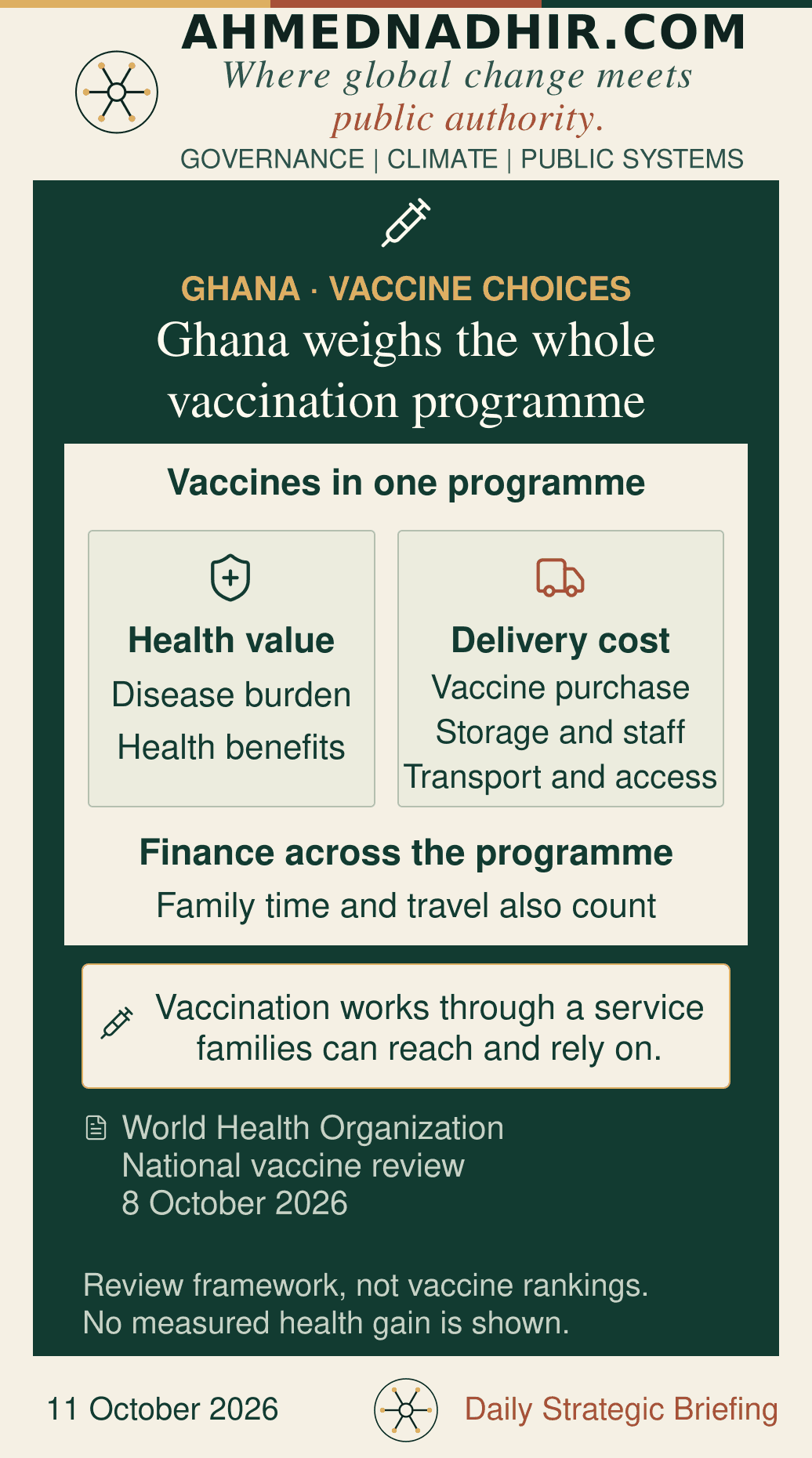
Ghana is assessing vaccine proposals as a portfolio, rather than one introduction at a time. Its Ministry of Health, Ghana Health Service and National Immunisation Technical Advisory Group are examining new vaccines and changes to existing schedules, with support from the World Health Organization and the United Nations Children’s Fund (UNICEF). The account was published on 8 October.
The review brings disease burden and health benefits together with costs and delivery requirements. A vaccine’s purchase price is one part of the decision. Refrigeration, staffing, transport and the visits families make determine how much a programme costs and how readily people can use it. Ghana’s review considers these demands across the programme; finalising the report and updating the national strategy remain the next steps.
Financing gives the exercise a wider public purpose. Gavi’s current policy places Ghana in accelerated transition towards domestic financing, while UNICEF’s February account describes a parliamentary caucus supporting immunisation funding and oversight. Comparing the whole programme helps officials explain which prevention choices deserve priority and what services need to deliver them. The benefit for families is a programme designed around both protection and access.
ENERGY
Eastern Africa · Utilities and cross-border electricity
Shared electricity planning brings demand and grid investment together
Workshop: 29–30 September 2026, Kigali · Bank account published: 9 October
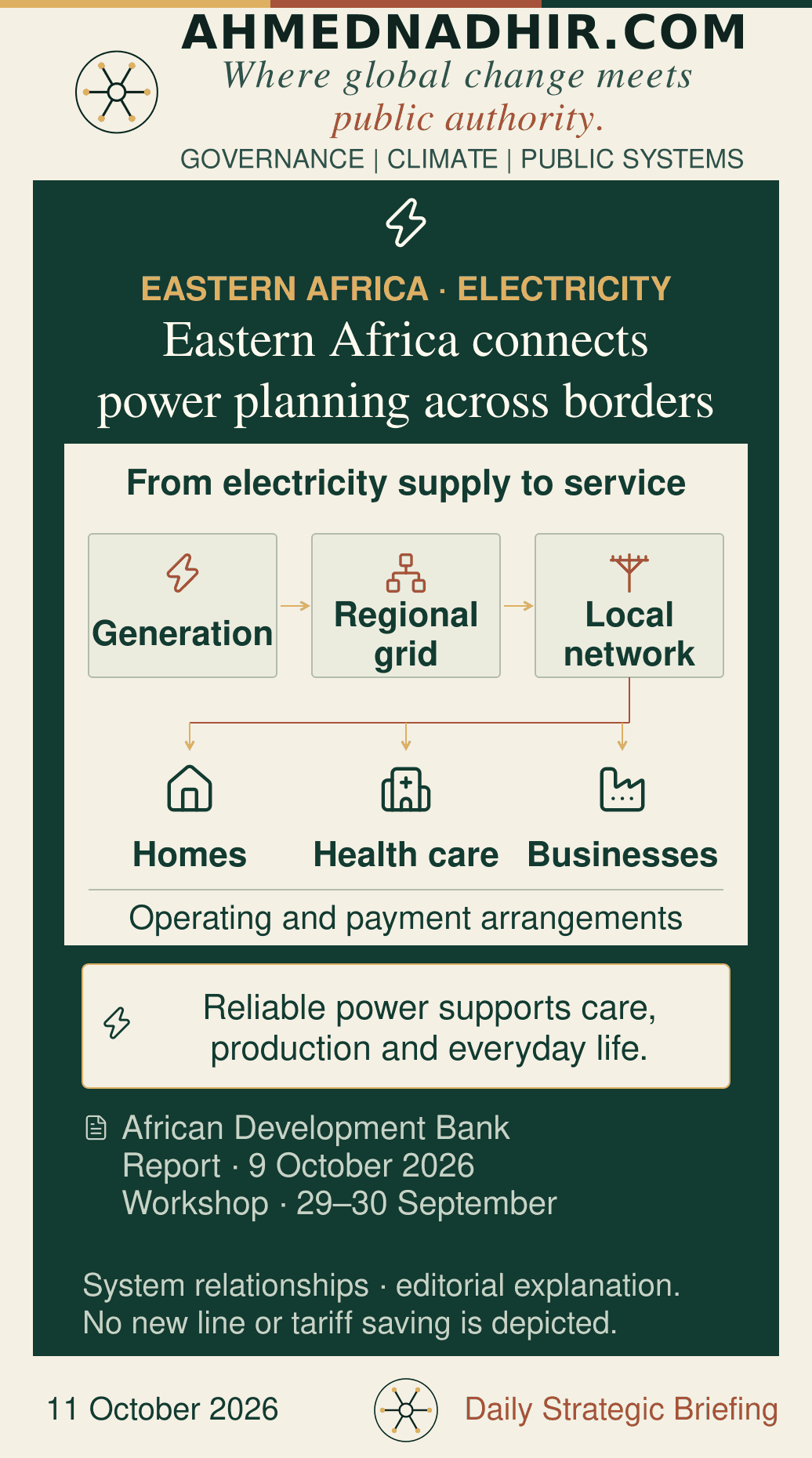
Eastern African utilities are improving the evidence behind their regional electricity plan. A workshop in Kigali on 29 and 30 September reviewed demand forecasts, generation and transmission data, the African Development Bank reported on 9 October. Its recommendations will guide the next stage of the Eastern Africa Power Pool’s master-plan study.
The bank supported the work through the Sustainable Energy Fund for Africa. National specialists examined the completeness and quality of the data and strengthened their demand-forecasting skills. The resulting study will inform investment choices across electricity systems that depend on one another.
Electricity trade connects power available for sale with a network able to carry it when customers need it. Planning generation and transmission together helps identify the investments that complement one another: a new source of supply, a stronger regional link or a local network serving rising demand. Operating arrangements and dependable payment make that physical connection commercially usable. A hospital, cold store or workshop receives the benefit when regional supply and national distribution work together.
AFRICAN ECONOMIES
Guinea · Mining purchases and local suppliers
The business opportunities around Guinea’s mining economy
Economic Update: September 2026 · World Bank web announcement: 9 October
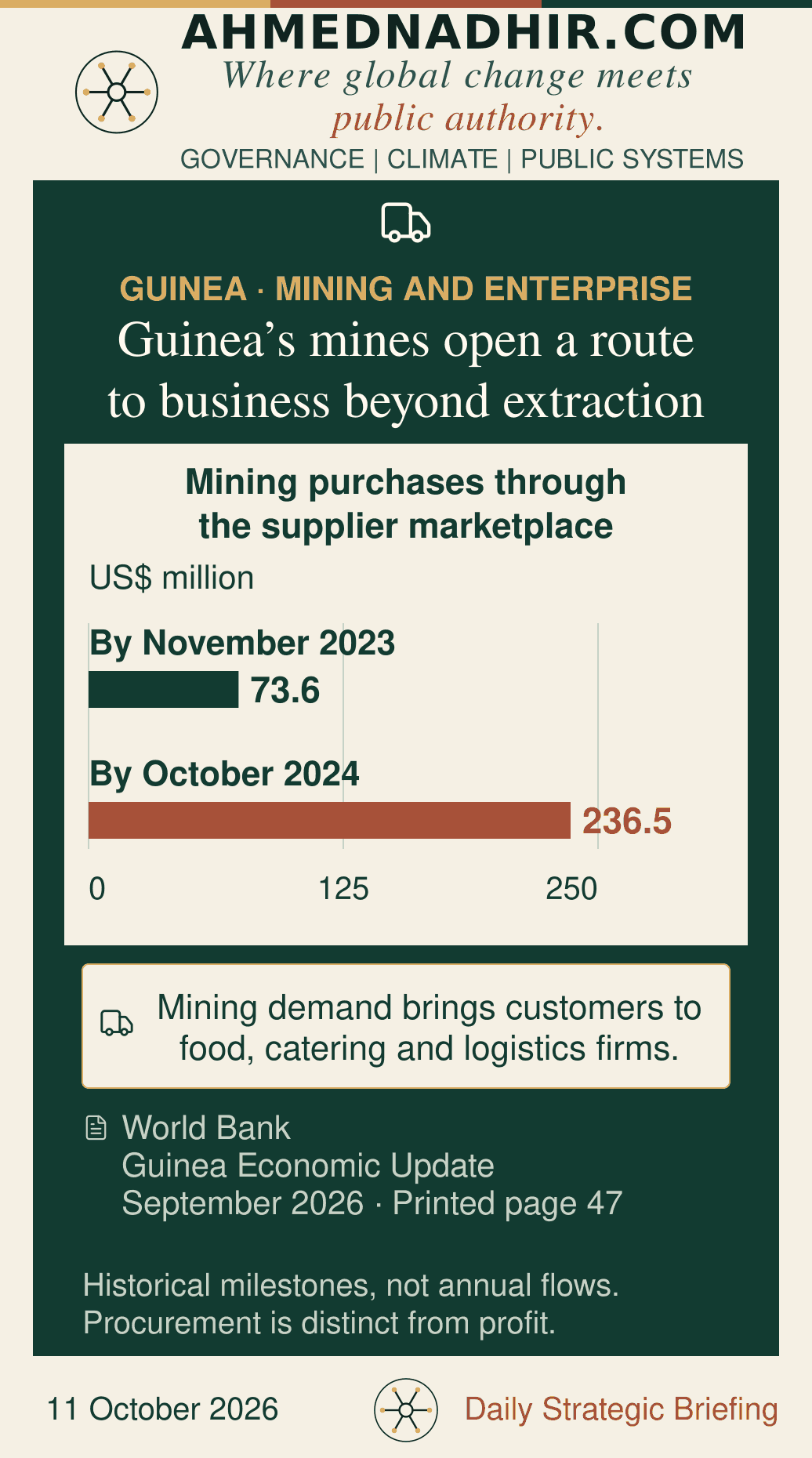
Guinea’s latest World Bank Economic Update examines how mining demand can support businesses beyond extraction. One example is its supplier marketplace: the report records US$73.6 million in mining procurement channelled through it by November 2023, rising to US$236.5 million by October 2024.
Those historical milestones show an established purchasing channel, not a 2026 earnings forecast. Food supply, catering and logistics connect mining customers with businesses whose skills and products also serve other markets.
The wider opportunity lies in making an order commercially usable. A supplier needs the required quality, funds to fulfil the contract and payment that replenishes working capital. The gain reaches the economy through the production and wages behind the sale; the full contract value is not a measure of additional national income.