
Public finance · Economic reform
Botswana
Botswana’s reform loan aims to lower procurement costs
Announcement: 23 October 2026. Programme series: 2026/27–2027/28.
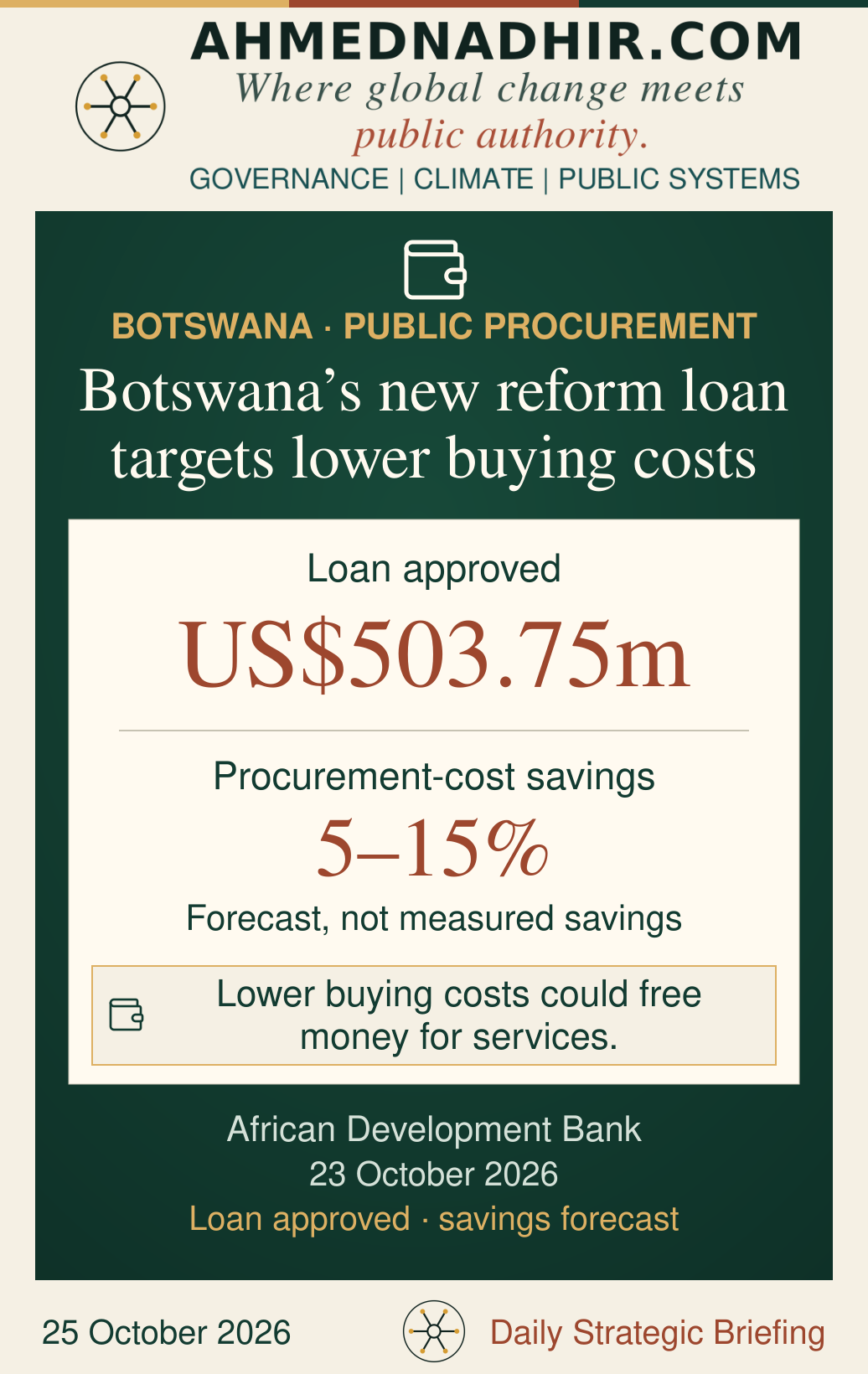
The African Development Bank has announced approval of a US$503.75 million loan for Botswana, combining support against energy-price pressures with fiscal and private-sector reforms. The announcement of 23 October describes the first phase of a two-year programme, with separate US$170 million co-financing from the OPEC Fund.
Its ambitions extend from electricity access and land administration to support for smaller firms and electronic procurement. The Bank forecasts procurement savings of 5–15 per cent. Those are expected gains: the announcement does not establish that the new loan has been disbursed or that these savings have occurred.
Health · Primary care
Uganda
Uganda expands free community malaria care to older children and adults
Implementation update published: 23 October 2026. Community services are being expanded.
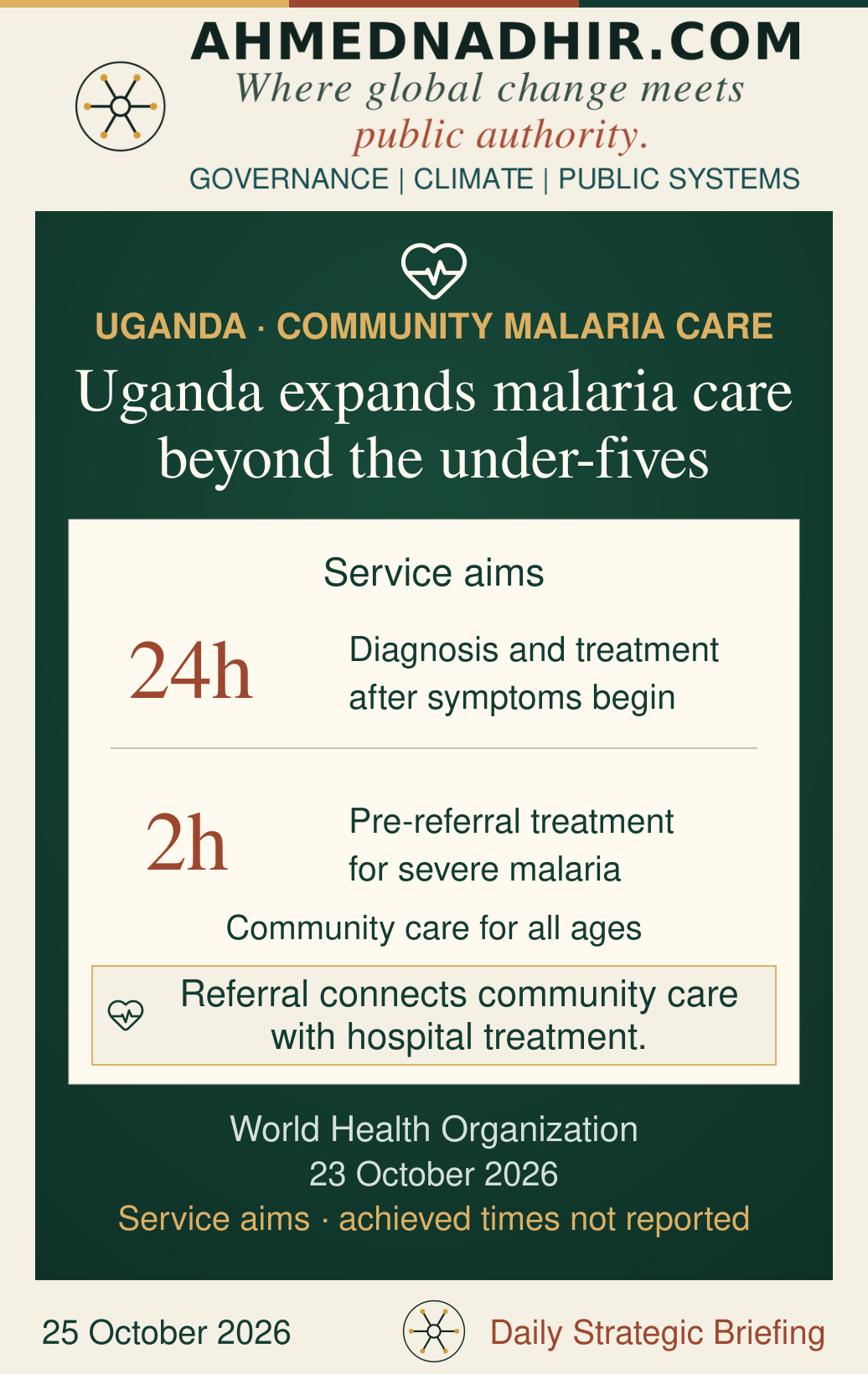
Uganda’s Ministry of Health is expanding community malaria testing and free treatment to older children and adults, extending services previously focused on the under-fives. Community health workers are being trained and equipped to provide care nearer people’s homes. For families facing transport costs and lost wages, that changes the journey as well as the test.
The World Health Organization’s 23 October account places the expansion within Uganda’s 24-2 Hours Initiative: diagnosis and treatment within 24 hours of symptoms, and lifesaving pre-referral treatment for severe malaria within two hours. These are service aims. The account does not report the proportion of patients meeting them or an evaluation attributing changes in deaths to this expansion.
Governance · Development evidence
International development finance
Nine-donor study estimates impact research at under 1% of spending
Analysis published: 23 October 2026, with an accompanying methods note. Spending period: 2010–2025; 2025 reporting is incomplete. Data snapshot: 13 January 2026.
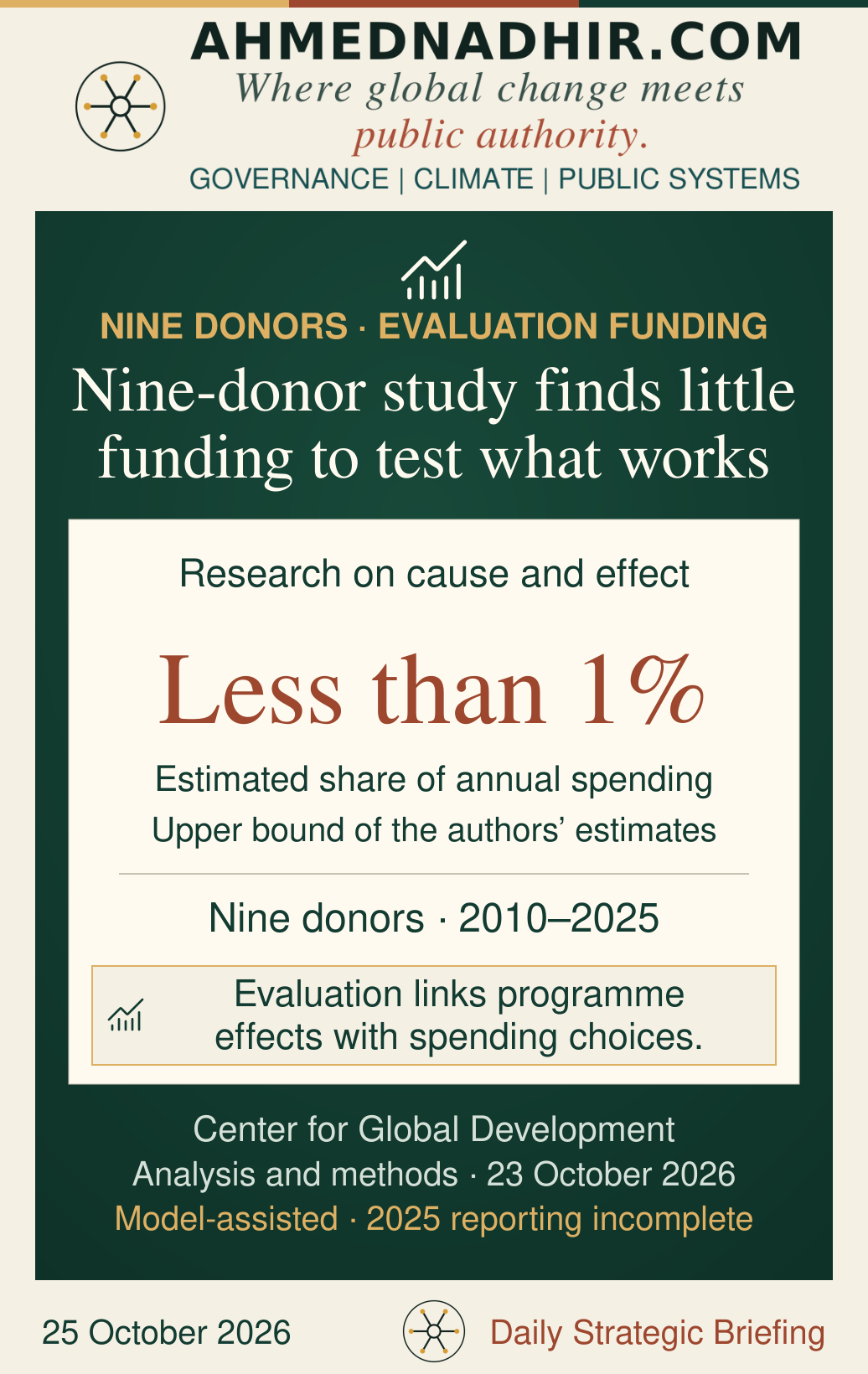
A new analysis by Michelle Rao, David Gentili and Markus Goldstein at the Center for Global Development estimates that rigorous impact evidence received less than 1 per cent of annual disbursements across nine donors during 2010–2025, even at the upper bound of their estimates.
Published on 23 October, it examines research designed to establish whether an intervention caused an outcome, rather than all research or monitoring. The authors used artificial intelligence to classify almost 80,000 aid activities, then adjusted estimates using manual checks of 152 projects and assumptions about evaluation costs.
Voluntary reporting, incomplete descriptions and omitted internal research costs limit the totals. Reporting for 2025 is incomplete. The historical estimates do not measure the full effect of subsequent aid cuts.
Climate · Transport and work
Jakarta and Hanoi
Jakarta’s bus agency counts 52 women drivers following expanded training
United Nations Environment Programme account: 23 October 2026. Jakarta training began in August 2025; partner agreement signed 28 August 2025.
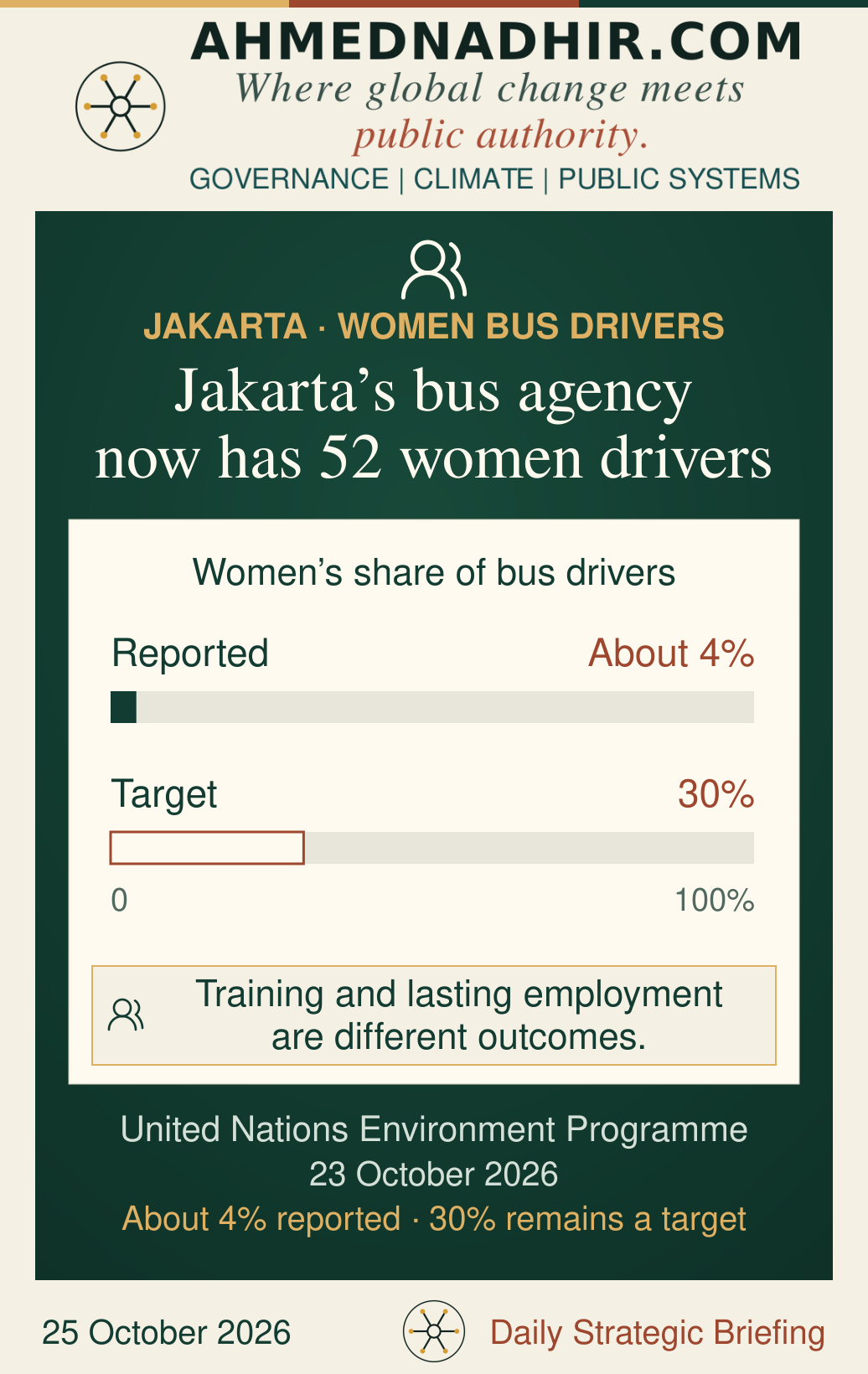
The number of women driving for Jakarta’s bus agency has more than tripled to 52 since training began, according to a United Nations Environment Programme account published on 23 October. Women still represent about 4 per cent of drivers, against an ambition of 30 per cent.
The 23-day course includes vehicle systems, driving and assistance for passengers with additional needs. In Hanoi, a related programme has placed 20 young women in transport internships. These are reported participation and employment developments, not proof of sustained job retention or a measured emissions reduction from the training.